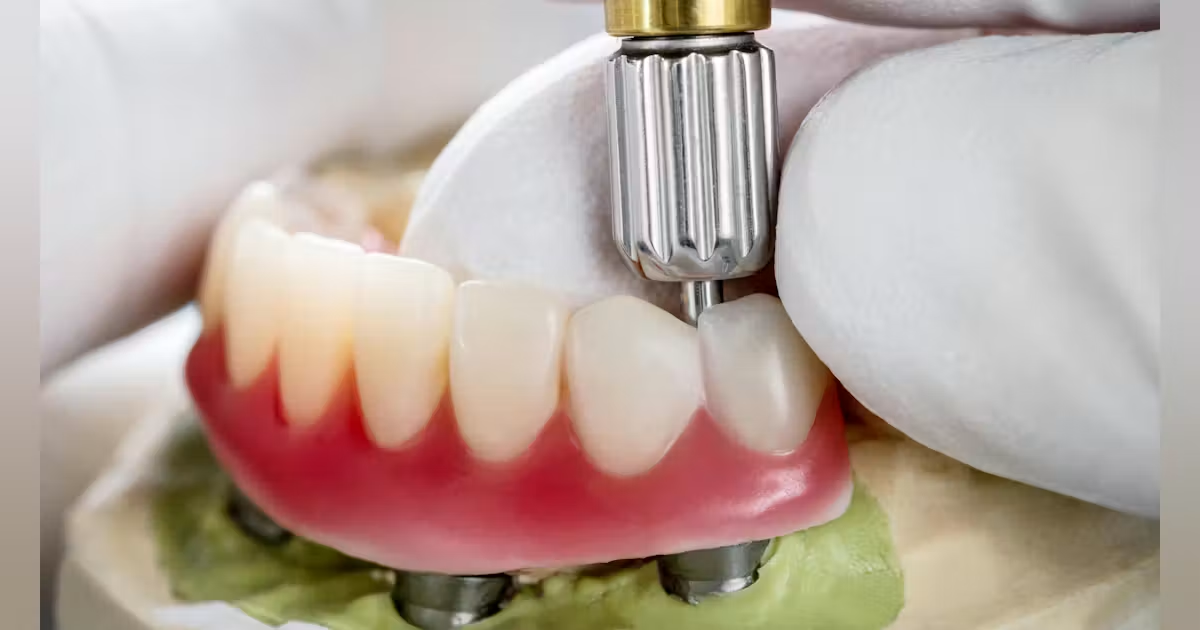
Preventing peri-implant disease: What the latest evidence demands of every clinician

A review of current evidence on peri-implant disease prevention, covering pre-placement risk assessment, prosthetic design, risk-based maintenance intervals, and air-abrasive biofilm removal with glycine and erythritol powders.
Key Takeaways
- Screen for periodontitis history, smoking and glycemic control before placing any implant.
- Design emergence profiles and contours that let patients clean and clinicians probe.
- Set recall intervals by risk: three to six months for moderate to high risk.
- Add glycine or erythritol air abrasion to routine implant maintenance protocols.
- Do not use air polishing alone for established peri-implantitis; evidence is insufficient.
GoTu survey data: Income satisfaction is higher with temp work, but so is burnout

GoTu surveyed nearly 8,000 dental professionals over three years. About one in eight hygienists, assistants and dentists now combine permanent with temporary or gig work, reporting higher income satisfaction alongside higher burnout and less paid time off.
Key Takeaways
- Expect roughly one in eight candidates to want blended permanent and temp schedules.
- Offer paid time off and raises; temp hygienists report far less of both.
- Address burnout drivers, since 65% of temp-working hygienists report burnout.
- Treat flexibility as a retention lever, not just a stopgap staffing fix.
Omega-3 and low-dose aspirin show promise in periodontitis

A year-long randomised trial of 109 patients with Stage III or IV periodontitis found omega-3 plus low-dose aspirin matched adjunctive metronidazole and amoxicillin outcomes, with benefits persisting six months after stopping supplements.
Key Takeaways
- Consider this adjunct for patients who cannot take systemic antibiotics.
- Adding antibiotics to omega-3 and aspirin gave no extra benefit in the trial.
- Check aspirin contraindications such as gastric ulcers or blood disorders first.
- Evidence covers only systemically healthy non-smokers; counsel other patients cautiously.
Survey finds strong interest in using HSA, FSA funds for oral care products

A Consumer Healthcare Products Association survey found 83% of HSA and FSA holders would buy everyday oral care products with those funds if eligible. The ADA backs the bipartisan Oral Health Products Inclusion Act, H.R. 1219.
Key Takeaways
- Tell patients their HSA or FSA funds currently cannot cover toothbrushes or floss.
- Note that 14% of consumers are buying oral care products less often.
- Use the pending legislation to frame preventive care conversations at recall visits.
- Watch for eligibility changes that could shift how patients pay for hygiene products.
400 laws and counting: Dental advocacy is driving change

Dentists and advocates have helped advance 400 dental insurance reform laws nationwide. Eighteen states enacted 33 new laws this year, following more than 100 reform bills introduced across 37 states in 2026.
Key Takeaways
- Track assignment of benefits, virtual credit card and network leasing laws in your state.
- Expect continued reform momentum, with more laws anticipated this fall.
- Use ADA state resources to see which protections now apply to your claims.
- Engage your dental society; grants supported the advocacy behind these wins.
ADA urges Senate Finance Committee to include dental in insurance reforms

The ADA responded to a Senate Finance Committee request for information, asking that dental benefits be included in insurance reforms covering self-funded plans, third-party administrators, prior authorization and transparency.
Key Takeaways
- Expect scrutiny of ERISA preemption, which limits state law on self-funded plans.
- Push for dental-specific prior authorization and appeals standards in any reform.
- Support state waiver authority so dental protections reach self-funded plans.
- Watch Medicare Advantage dental oversight and opt-out rights for network dentists.