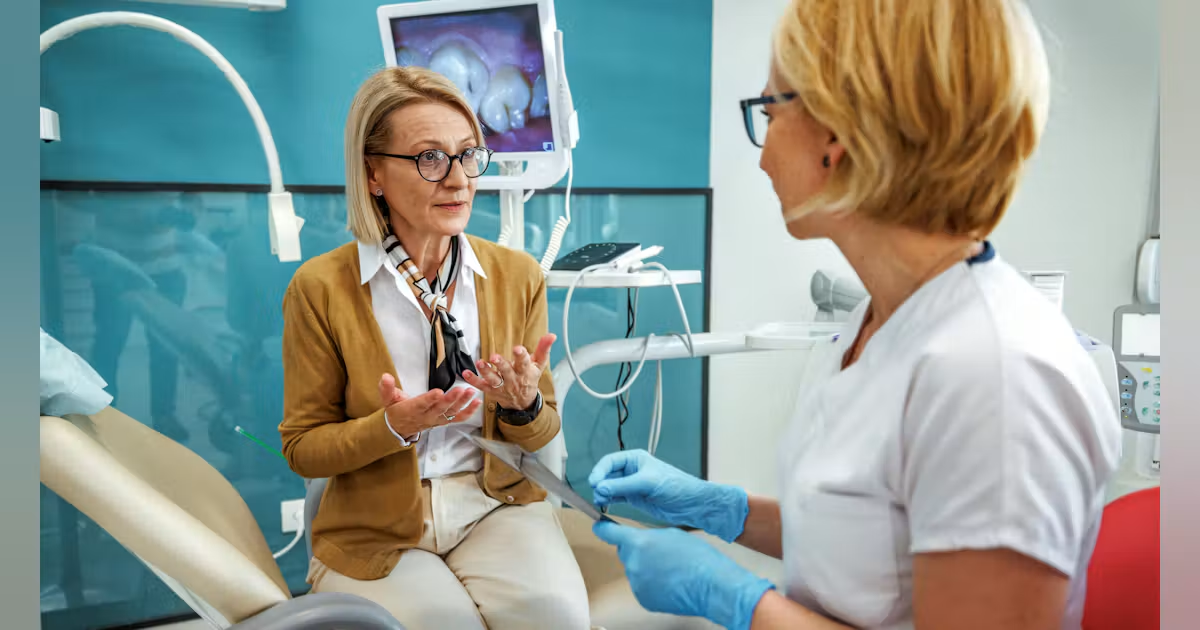
ChatGPT cites practice websites for 53.8% of dental answers

A study of 1,405 patient-style questions across 20 US markets found practice-owned sites made up 53.8% of ChatGPT’s dental citations, over three times the next category, and 87.2% of questions cited at least one practice site.
Key Takeaways
- Rewrite each service page to answer patient questions in their own words.
- Replace “call to schedule” copy with candidacy, cost, timeline and comparison detail.
- Prioritize specialty pages: orthodontics drew 75.8% practice-site citations, periodontics 72.5%.
- Expect vague queries like “best dentist” to surface directories instead of your site.
- Audit your site for the specific, quotable content AI models can cite.
Competence begins where the emergency starts

An oral surgeon argues that routine success does not prove competence; preparedness for rare emergencies such as airway obstruction, laryngospasm and arrhythmia does, and that humility and referral are core professional skills.
Key Takeaways
- Never offer a procedure unless your team can manage its worst complication.
- Build standardized emergency protocols and rehearse them through simulation training.
- Verify emergency equipment regularly rather than assuming it is ready.
- Refer patients when another setting or specialist better serves their safety.
- Make safety a documented culture via credentialing and peer accountability.
Complete SOAP notes before billing to stop denials

Part two of a billing series argues incomplete clinical notes are a leading cause of delayed or denied claims, and recommends SOAP note protocols, defined team documentation roles and regular chart audits.
Key Takeaways
- Audit ten random patient charts across multiple providers this week.
- Enforce a no-blank-fields standard in all templated notes.
- Assign who documents each SOAP section before the appointment starts.
- Record materials, anesthetics and products used during every visit.
- Withhold billing and treatment planning until the note is complete.
Webinar: lateral sinus floor elevation, planning to surgery

A one-CE live webinar on 27 October 2026 features Dr. Adrian Gnatek covering CBCT interpretation, window design, membrane elevation, graft selection and managing perforation in lateral sinus augmentation.
Key Takeaways
- Register your implant team for the 27 October session in your time zone.
- Use the biomaterial comparison to justify graft choices in treatment plans.
- Apply the residual-bone guidance to decide simultaneous versus staged placement.
- Review membrane perforation management before your next sinus lift case.
Treatment acceptance starts before the financial talk

A practice management consultant argues insurance is often the wrong first conversation, and that case acceptance depends on consistent team handoffs and helping patients take ownership of their condition.
Key Takeaways
- Delay insurance and payment talk until the patient owns the problem.
- Brief the next team member on patient concerns during every handoff.
- Train the whole team, including front desk, in case acceptance language.
- Watch for ownership questions like “what do I need to do?” as buying signals.
- Lead with empathy about cost pressures before presenting solutions.
HHS awards $51M for children with neurodevelopmental disorders

HHS, through HRSA, is funding 28 health centers with up to $2 million each to expand dental access, workforce training and sensory-friendly care for children with autism, Down syndrome, cerebral palsy and intellectual disabilities.
Key Takeaways
- Expect more young adults with special health care needs transitioning into general practice.
- Train your full team, including front desk, in sensory-aligned communication.
- Consider desensitization visits and pre-visit videos to reduce anxiety.
- Modify waiting and treatment rooms with noise-reducing, sensory-friendly features.
- Track grant-funded models that may spread to other communities.
Bone health, systemic health, and dentistry: Part 1

First of a three-part series on bone health across the lifespan argues dental teams can flag osteoporosis risk through medical histories, exams and radiographs, noting roughly 70% of cases go undiagnosed.
Key Takeaways
- Add osteoporosis risk questions to your medical history review.
- Note increased alveolar bone loss and reduced trabecular density as possible red flags.
- Refer at-risk patients for DXA screening rather than diagnosing in office.
- Counsel adolescents and caregivers on building peak bone mass early.
- Document radiographic findings that warrant medical evaluation.
In-house 3D printing for implant restorations and aligners

A clinician with five years of in-house printing describes workflows for models, surgical guides, definitive and provisional implant restorations, and directly printed shape-memory aligners, citing shorter turnaround and lower lab costs.
Key Takeaways
- Evaluate printed provisionals to refine occlusion and aesthetics before finals.
- Check resin mechanical strength and fracture resistance under occlusal load.
- Budget for post-polymerisation and staining equipment alongside the printer.
- Weigh shorter turnaround and reduced lab reliance against setup costs.
- Consider printed aligners for selected cases, including attachment-free ones.