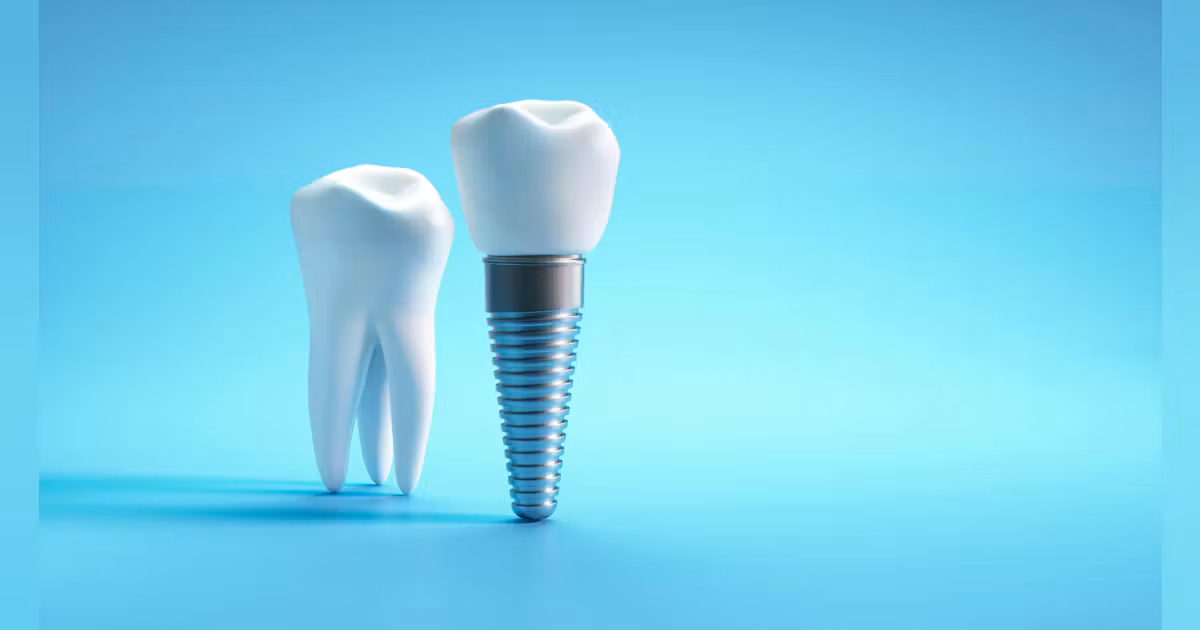
When immediate loading should not be the goal in full-arch implant cases

A clinician argues immediate full-arch loading should follow patient selection, primary stability, prosthetic planning and controlled healing rather than being promised upfront.
Key Takeaways
- Review recent HbA1c and hygiene before offering immediate loading to diabetic patients.
- Delay immediate loading in heavy smokers until smoking is substantially reduced or stopped.
- Judge torque per implant position, not as a single pass-or-fail number.
- Leave low-stability implants out of the provisional rather than loading them.
- Plan roughly three months provisional, extending toward six with major augmentation.
When patients ask ChatGPT about dental care, these are the websites it cites most

A study of 1,405 patient-style dental questions found practice-owned websites made up 53.8% of ChatGPT’s cited sources, more than triple the next category.
Key Takeaways
- Rewrite service pages to answer candidacy, cost, timeline and comparison questions patients actually ask.
- Replace thin “we offer X, call today” pages, which give AI nothing to quote.
- Prioritize specialist service pages, where practice-site citations ran highest.
- Expect vague queries like “best dentist” to surface directories instead of your site.
- Audit your site as an AI citation source, not just a search-ranking asset.
Competence begins where the emergency starts

An oral surgeon argues clinicians are measured by how they handle rare emergencies, urging preparation, humility and team-based safety culture over routine success.
Key Takeaways
- Only offer sedation if your team can manage its worst complication, not just routine cases.
- Run simulation training and verify emergency equipment rather than assuming readiness.
- Build referral relationships with specialists and dental anesthesiologists for complex patients.
- Treat a complication-free record as untested, not proof of competence.
- Make credentialing, protocols and peer accountability part of practice culture.
Preventive dental billing: Applying clinical care to your revenue cycle—clinical documentation

Part two of a billing series argues incomplete clinical notes drive denials and delays, and recommends SOAP notes, defined team roles and regular chart audits.
Key Takeaways
- Audit ten random patient charts this week across multiple providers.
- Enforce SOAP notes on every visit so claims carry a documented diagnosis.
- Assign who documents each note section and ban blank template fields.
- Withhold billing and collections until the clinical note is complete.
- Assume payers want the original note, not a post-treatment appeal letter.
Lateral approach for maxillary sinus floor elevation: from treatment planning and biomaterial selection to safe and predictable surgery

A one-CE live webinar on 27 October 2026 covers lateral sinus floor elevation, from CBCT planning and membrane elevation to graft selection and perforation management.
Key Takeaways
- Register your team for the 27 October session to earn one CE credit.
- Use the case-based format to refine CBCT interpretation before sinus cases.
- Compare biomaterials by composition, handling and remodeling evidence, not habit.
- Review membrane perforation recognition and case-dependent management options.
- Check time-zone listings, as the session runs 20:00 London time.
Why treatment acceptance starts before the financial conversation

A practice management consultant argues insurance and cost objections often mask uncertainty, and case acceptance depends on consistent team handoffs and patient understanding.
Key Takeaways
- Delay insurance and payment talk until the patient understands the condition.
- Brief the next team member on patient concerns during every handoff.
- Watch for ownership questions like “should I be worried?” as buying signals.
- Train the whole team, not just the coordinator, in case acceptance conversations.
- Treat cost objections as possible stand-ins for unresolved doubt.
HHS awards $51M to expand dental care for children with neurodevelopmental disorders

HHS awarded $51 million through HRSA to 28 health centers to improve dental access for children with autism, Down syndrome, cerebral palsy and intellectual disabilities.
Key Takeaways
- Expect grant-funded health centers to build referral pipelines for special-needs patients.
- Train front-desk staff in sensory-aligned communication, as Salud Family Health plans.
- Consider desensitization visits and pre-visit videos to reduce patient anxiety.
- Prepare general dentists to retain special-needs patients aging out of pediatric care.
- Watch for replicable care models the 28 recipients will evaluate and share.
In-house 3D-printing workflows for implant restorations

A Japanese clinician describes five years of in-house 3D printing for models, surgical guides, crowns, implant provisionals and shape memory aligners.
Key Takeaways
- Use printed provisionals in All-on-4/5/6 cases to refine occlusion and aesthetics.
- Check printed crown resins for occlusal strength and shade before adopting them.
- Weigh shorter turnaround and lower lab costs against in-house workflow demands.
- Combine intraoral scans with CBCT data for printed surgical guides.
- Consider printed aligners as an alternative to thermoforming for selected cases.